the project Jalul

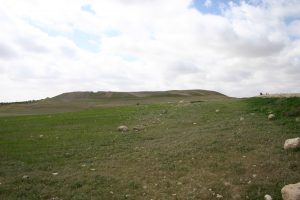
Tell Jalul is located 5 km east of the town of Madaba in the fertile highland plains that extend south and east from Amman and Hesban in the country of Jordan. It is believed to be largest archaeological mound in the central part of the country.

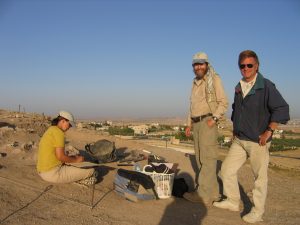
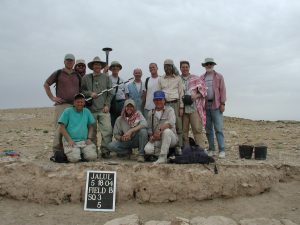
A proposal by veterans of the Hesban dig to commence excavations at Tall Jalul had originally been presented to the Department of Antiquities of Jordan already in 1982. For a variety of reasons, however, work at the site had to be post phoned for nearly a decade. Work finally got underway in 1992, with Madaba Plains archaeologists  Randy Younker and David Merling serving as co-directors. They have completed five field seasons at the site.

The Jalul team has identified eight field phases to date. Although little architecture has been uncovered from the Iron I Age (1200-1000 B.C.E.), the 1999 season produced two to three meters of fine, ashy deposits on the north side of the tall which date consistently to this period. In addition, a stretch of wall in Field C (located in the center of the tall northeast of the acropolis) has appeared beneath an Iron II wall and could date to Iron I. Next to the wall was collapsed mudbrick that contained typical Late Bronze and Iron I pottery, providing evidence for occupation during those periods. A necklace containing a variety of glass, frit and semi-precious stones was also found in this collapse. Ashy lenses full of late Iron I and early Iron II pottery was found under all the Iron II structures in both Fields A and B, as well.

The early Iron II period (10th-9th centuries B.C.E.) was represented by the northern walls of perhaps several buildings in Field A on the north side of the tall. The architecture of the western-most building suggests a domestic dwelling. It was founded directly on top of the ashy layers full of Iron I and early Iron II pottery, noted above. A possible door was preserved in the northwest corner of this room. All that can presently be seen of the eastern-most early Iron II building is its northernmost wall.

Excavations in Field B (on the east side of the tall) continue to trace the early Iron Age II approach ramps to the city gate. The ramp, or approach road, was paved with typical flat flagstones, similar to those seen at Tel Dan and Tel Beersheba, west of the Jordan River. Although it appears that most of the corresponding gate was robbed out, three piers of an outer gatehouse were preserved. Additional flagstones from this period were recently found between the outer gatehouse and what appears to be the threshold of the inner gatehouse of the 10th-9th centuries B.C.E.. Stratigraphic evidence suggests that this gateway's entrance was resurfaced with flagstones four or five times during Iron Age II.

The middle Iron II period (8th century B.C.E.) was represented in Field A by the northern walls of the early Iron II buildings. In Field B a contemporary approach ramp, paved with flagstones, was traced along approximately the same line as the earlier road of early Iron II. This later road also apparently led to a city gate, although it appears that this later gate was robbed out shortly after the 8th century B.C.E. city was abandoned or destroyed. Only a few large stones have survived of the inner gatehouse.

The late Iron II period (7th-6th centuries) has revealed in Field A on the north side of the tall a large tripartite building. Although badly damaged from later Persian-period activity, parts of all four walls of this large building could be traced. Indeed, the western wall has survived completely intact. Typical of tripartite buildings, the two side rooms of this building ran the entire length of the building and were paved with flagstones. The floor of the long central room, however, was made of packed earth. The roof was supported by two parallel rows of stone pillars, most of which had fallen over in a northerly direction. A number of fine clay figurines were found in this building which included both human and animal forms. The animal forms included the typical horse-and-rider figurines. One particularly interesting human figurine appeared to wear a headdress that reflected Egyptian styles.

Also from this period were found a couple of engraved seals. The most interesting was written in an Ammonite script typical of the 7th century B.C.E.. The inscription reads ?belonging to Naqab, son of Zedekel.? Both of the names have been found on other Ammonite seals. The presence of this seal might suggest that the border of the Ammonites during the latter part of the Iron Age extended as far south as Madaba.

The late Iron II/Persian period (late 6th-5th centuries B.C.E.) was represented in Field A by several pits, wall sections and a stretch of pavement. No coherent architectural plan of this period has yet been discerned, however. In Field C, the eastern and southern walls of a late Iron II/Persian-period building were excavated down to floor level. The southern wall of this building was built up against the mudbrick tumble and walls of earlier periods. An incense stand from the Persian period was found inside the Late Iron II/Persian building of Field C. Also discovered inside the building, near the center of the main room, was an opening in the floor over one meter across. The hole led to a subterranean cave or storage cellar. Excavation made it clear, however, that its final use involved the destruction of the building, stones from its walls tossed helter-skelter into the cave along with the skeletal remains of 15 people. Likely, invaders threw vanquished occupants into what became their communal tomb, even if mixed haphazardly with destruction debris.

Field D, also near the center of the tall, has begun to produce the picture of a large building from this period. So far, six rooms have surfaced and they have yielded to this point large numbers of bowl sherds as well as figurine fragments.

more info